Category Archives: Featured

GLP-1 Medications for Weight Loss: How to Get Started | News
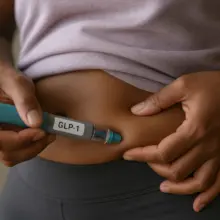
Any licensed health care provider—including primary care physicians, nurse practitioners, physician assistants, and specialists such as endocrinologists, cardiologists, and gastroenterologists—can prescribe GLP-1 medications. Ideally, the prescriber is someone you can work with long term, says John Morton, MD, MPH, chief of Bariatric and Minimally Invasive Surgery at Yale Medicine and a board-certified obesity medicine specialist. “That’s because obesity is a chronic disease,” Dr. Morton says. “It didn’t happen overnight and it’s not going to get better overnight. […]

Read more
Why People Won’t Quit a Weight Loss Drug—Even When It Makes Them Feel Sick

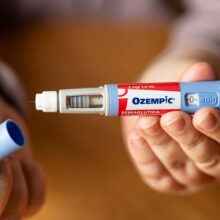
Rutgers Health research sheds light on why people using the anti-obesity medication semaglutide say the results matter more than the side effects Patients who use semaglutide for weight loss, like Ozempic, are more likely to continue the medication if they perceive it as effective, even when facing unpleasant side effects, according to Rutgers Health researchers. Their study, published in Journal of Medical Internet Research, found perceived effectiveness – reductions in weight, appetite or food cravings – was the […]

Read more

Popular weight-loss drugs Ozempic and Wegovy may slow biological aging

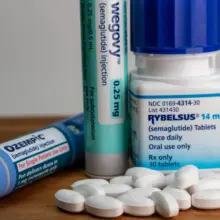
The growing popularity of GLP-1 medications such as Ozempic, Wegovy, and Rybelsus has largely been driven by their ability to help people lose weight, improve blood sugar control, and reduce the risk of cardiovascular disease. Now, researchers have uncovered another possible benefit. A new clinical trial suggests that semaglutide, the active ingredient in those medications, may also help slow some of the biological processes associated with aging. Published in Nature Communications, the study provides the first randomized, […]

Read more

Could GLP-1 drugs be the key to your weight loss? Learn if they really can help people with obesity | Cultivating Health

GLP-1 receptor agonist drugs have transformed the thinking around obesity treatment. Drugs like Ozempic and Mounjaro were originally created to help people with type 2 diabetes. While they weren’t designed for people who wanted to lose weight, a side effect of those medications was some weight loss. The formulations were slightly tweaked and sold as weight loss drugs, which include Wegovy and Zepbound. About 41 million Americans, or 1 in 8, have used GLP-1 drugs. How is […]

Read more

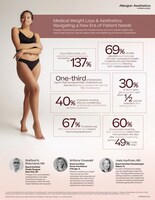
ALLERGAN AESTHETICS HIGHLIGHTS MEDICAL WEIGHT LOSS (MWL) DATA AND THE CHANGING PROFILE OF PATIENTS

ALLERGAN AESTHETICS HIGHLIGHTS MEDICAL WEIGHT LOSS (MWL) DATA AND THE CHANGING PROFILE OF PATIENTS Data shows a rise in specific treatment demand; a shift in patient consultation and the rising role of facial volume restoration 67% of patients say MWL treatment changed their goals toward improving appearance, not just weight reductioni. Nearly half of MWL patients (47%) were reported by HCPs to benefit most from hyaluronic acid injectable fillers when addressing post-weight-loss facial concernsii. 60% of […]

Read more

GLP-1 pills for weight loss are here. How will they change obesity care?

Within three weeks of their launch in the United States on Jan. 5, 2026, the newly approved GLP-1 pills for weight loss had been prescribed to about 170,000 people, outpacing the rate of adoption of other GLP-1 medications.   Previously, GLP-1 medications — which mimic the naturally occurring hormone glucagon-like peptide-1, which regulates blood sugar, digestion, and hunger — had been approved only to treat obesity in the form of weekly, home-administered injections. Even so, an October […]

Read more

GLP-1s like Ozempic transformed weight loss and diabetes. Is addiction next? : NPR

People taking GLP-1 drugs like Ozempic for diabetes were less likely to be diagnosed with substance use disorder, a new study shows. Maria Fabrizio for NPR hide caption toggle caption Maria Fabrizio for NPR There’s new evidence that GLP-1 drugs like Ozempic can reduce the risk of addiction. A study of more than 600,000 veterans followed for up to three years found that those who started taking a GLP-1 drug for diabetes were about 15% to 20% […]

Read more

GIB Approves Cost Sharing, GLP-1s for Weight Loss for 2027

Updated: April 15, 2026 Last Friday, the Group Insurance Board approved cost-sharing changes for plan year 2027 targeted towards mitigating trends in plan utilization and rising costs. In addition, the Board approved the coverage of GLP-1 anti-obesity medications (AOMs) and drug copay assistance for Group Health Insurance Program (GHIP) members. The March 13 meeting was a follow-up to the February 25 Board meeting at which the Board directed the Department of Employee Trust Funds (ETF) to further […]

Read more

Non-incretin approach for weight loss

RESEARCH HIGHLIGHT 18 March 2026 Despite remarkable success in treating obesity, glucagon‐like peptide‐1 receptor agonists (GLP1‐RAs) face challenges including limited efficacy in some individuals, gastrointestinal side effects, potential muscle mass loss and rapid weight rebound after treatment. There is considerable interest in identifying complementary non-GLP-1RA-based approaches for modulating body weight. Writing in Cell Chem. Biol., Fu et al. now report that pharmacological inhibition of phosphotriesterase-related (PTER) reduces food intake and body weight in obese mice and achieves […]

Read more

Calorie deficit explained: Is it a safe, sustainable approach to weight loss?

Looking to lose weight? There always seems to be a trendy new method. But whether you’re practicing intermittent fasting, tracking your meals, or taking a GLP-1 medication, you’re following the same principle that has guided nutrition science for decades: creating a calorie deficit. Here’s how to maintain a calorie deficit safely — and how it can help you achieve sustainable weight loss. What is a calorie deficit? Your body needs a baseline number of calories to fuel […]

Read more
1 2 3 4 5 6 … 14