Medicare launches weight loss drug option with $50 copay : NPR

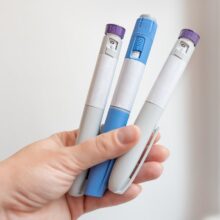
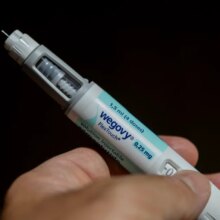
Weight management medications, including Wegovy, Zepbound and Foundayo, are now available to eligible Medicare beneficiaries.
Universal Images Group/Getty Images
hide caption
toggle caption
Universal Images Group/Getty Images
A Medicare pilot program for GLP-1 drugs launched Wednesday. Beneficiaries may be able to get a GLP-1 prescription for weight loss for $50 a month. It’s a notable shift for Medicare, which has long been barred from covering weight loss treatments.
The drugs, such as Wegovy and Zepbound, are effective but can be expensive without insurance coverage. They’re available in injection or pill form. Even with discounts, current cash prices typically range from $149 to $699 per month.
About half of GLP-1 users say these drugs were difficult for them to afford, according to KFF polling. A quarter said they were “very difficult” to afford.

But the new Medicare benefit comes with caveats, particularly around clinical guidelines and what happens when the short-term program ends.
What is this program?
The initiative, announced by the Centers for Medicare & Medicaid Services, or CMS, is a short-term pilot program known as the Medicare GLP-1 Bridge. It will run from July 1, 2026, through Dec. 31, 2027. It’s meant to “bridge” the gap before a longer-term program that might — or might not — begin in 2028.
The pilot program will offer coverage for the following GLP-1 medications approved for weight loss: the pill and injectable formulations of Wegovy, the KwikPen formulation of Zepbound, and the Foundayo pill.

Who can participate?
To get access to these weight loss medications, you must be enrolled in a Medicare Part D plan, which covers prescription drugs. After that, eligibility is based mainly on body weight and health status. People will qualify if they have a body mass index of 27 or higher and have a condition such as heart disease or prediabetes, among others. People with BMIs of 35 or higher automatically qualify. About 40% of American adults are clinically obese, with a BMI of 30 or higher, according to the Centers for Disease Control and Prevention.
How the program works (it’s a bit unusual)
This is not your typical Medicare benefit. Even though Part D enrollment is required, the Bridge program itself works differently.
Instead of going through your regular Part D plan, you will need prior authorization. Your doctor will send the prescription to a central system run by CMS contractor Humana, using a system already in place for another Medicare drug program. Doctors don’t need to be enrolled as Medicare providers to write a prescription or submit a prior authorization request under this program. Once they get approval, patients will pay the flat $50 copayment at the pharmacy when they pick up the prescription.
What are the benefits?
The cost savings could make these drugs accessible to patients who simply couldn’t afford them before. Even with discounts, the prices can be daunting without insurance coverage. TrumpRx, a new government website, provides links to direct-to-consumer prescription drug discounts for patients not using their health insurance.
On that site, Wegovy injectables range in price from $199 for a lower dosage for the first two months to $399 for a higher dosage. The KwikPen formulation of Zepbound costs up to $699 per month. At the highest dosages, the daily Wegovy pill costs up to $299 while Foundayo tops out at $349.
Most people who use these drugs will need a higher dose to maintain weight loss. The Bridge program is unique in that it offers a predictable $50 copayment that does not go up as dosages increase.
What are the downsides?
Like many pilot programs, there are trade-offs. The $50 copay will not count toward the Part D deductible, nor does it count toward the $2,100 annual out-of-pocket cap on prescription drug costs. The pilot program will also end in December 2027. Most studies have shown that many people who stop using the GLP-1 drugs regain weight they lost while taking them.
It still may not feel affordable to people with low incomes
If you receive the low-income subsidy, also known as the Medicare Extra Help program, you cannot use that assistance for the drugs covered by the GLP-1 Bridge program. For beneficiaries accustomed to paying a $5 or $10 copay for their pharmaceuticals, a $50 copay could still be a big financial barrier.
“Fifty dollars a month sounds like a great deal compared to paying the discounted prices through TrumpRx and these other direct-to-consumer options, but it’s a lot of money for somebody who’s living on a $750-a-month Social Security check,” said Juliette Cubanski, deputy director of the Program on Medicare Policy at KFF, a health information nonprofit that includes KFF Health News.
The $50 copay is only for weight loss
If you’re already taking one of these medications for a qualifying condition such as Type 2 diabetes, cardiovascular disease risk reduction, or sleep apnea, you’ll continue to get it through your regular Part D plan. That means you’ll pay your plan’s price, which may be higher than the $50 Bridge copay, meaning the same drug could cost different amounts depending on the reason it is prescribed.
If you’re already on a GLP-1 for weight loss, you may qualify for the Bridge program. Your prescriber will need to attest that you met the clinical criteria when you first started the medication. For example, if you started a GLP-1 in September 2024 with a BMI of 37, but in July 2026 you’ve lost weight and now have a BMI of 34, the prescriber should attest in the prior authorization request that you met the BMI criteria of 35 or over when the GLP-1 therapy started.
What happens after 2027?
The Trump administration had proposed a two-step approach to expand coverage of GLP-1s for obesity in Medicare. The Bridge program was initially planned to last six months — after that, the idea was to launch a longer-term program that would shift the cost of the drugs from the government to insurers. A recent study found the long-term program would have cost insurance companies billions of dollars in the first year. Not enough insurers signed on for the voluntary plan by the April deadline, so CMS instead announced it would extend the Bridge program to 18 months, with a new end date of December 2027.
The move will give insurance companies more data on how many people with Medicare get GLP-1 drugs for weight loss during the Bridge program and more time to negotiate with the Trump administration.
But extending the Bridge program will be “really expensive” for Medicare, Cubanski said, because the program heavily subsidizes the cost of the drugs.
“There’s no sense right now of the cost of the Bridge model, but it is likely to be billions of dollars a year in additional spending for Medicare,” Cubanski said.
The cost to Medicare will depend largely on how many people use the Bridge program. CMS has not provided any projections publicly, but a previous KFF analysis estimated that in 2020 close to 14 million Medicare beneficiaries were overweight or obese.
“This will just cost additional money, and we don’t know how much, because they haven’t disclosed it,” Cubanski said.
Are you on Medicare and interested in getting a GLP-1 for weight loss? Is a $50 copay manageable? Click here to contact KFF Health News’ reporting team.
KFF Health News is a national newsroom that produces in-depth journalism about health issues and is one of the core operating programs at KFF.